


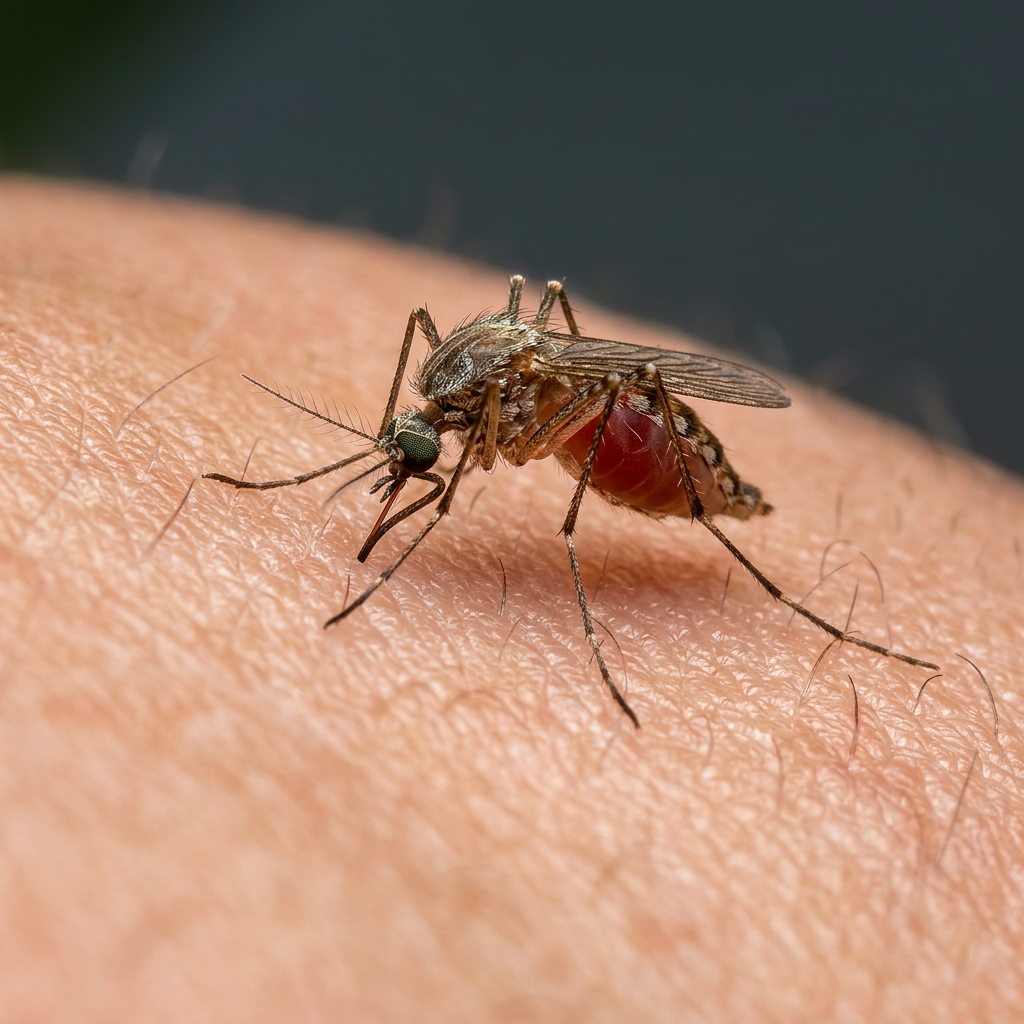
If you’ve had the windows open, the sprinklers running, or a kiddie pool sitting out longer than you meant it to this summer, you’ve probably noticed it: the mosquitoes are relentless this year. Houston-area health officials have already confirmed human cases of West Nile virus in 2026, and mosquito samples testing positive for the virus have turned up right in our backyard: across Harris, Fort Bend, and Montgomery counties. In other words, Katy, Tomball, and The Woodlands are on the edge of Houston but the center of the mosquito story.
Here’s what’s actually going on, what it means for your family, and what you can do about it before your next backyard evening turns into a swatting match.

Wait, West Nile Is Really Here?
Yes. This year’s first human case in Texas was confirmed in Harris County. It was classified as the neuro-invasive form, meaning it affected the patient’s nervous system. Fort Bend County has since confirmed a case of its own, and Montgomery County (home turf for our Woodlands neighbors) has reported mosquito samples testing positive for the virus as well. Health officials have been blunt about the reason: a wet spring and summer have left standing water everywhere, and standing water is exactly what mosquitoes need to breed.
The mosquito responsible, the Culex species, isn’t the aggressive daytime biter most of us picture. It’s a quieter, dusk-and-dawn feeder that picks up the virus from birds and then passes it along with a bite you may not even notice at the time.
What West Nile Actually Does to a Person
The numbers are worth knowing, mostly because they explain why officials are taking a handful of cases so seriously:
- About 80% of people infected never notice a single symptom.
- Roughly 20% develop what’s called West Nile fever: fever, headache, body aches, and fatigue that can knock you out for a week or more.
- Less than 1% progress to the neuroinvasive form, which can cause tremors, confusion, neck stiffness, or paralysis, and in rare cases can be fatal. Older adults and anyone with a weakened immune system face the highest risk here.
There’s no vaccine. The only real defense is not getting bitten in the first place, which is a strange thing to say out loud but is exactly where this becomes a backyard problem instead of a hospital problem.
Why Katy, Tomball, and The Woodlands Are Especially Prone to This
Every one of our service areas has a version of the same setup that mosquitoes love:
- Katy: newer subdivisions with retention ponds, drainage ditches, and clay soil that holds water in the yard long after a storm passes.
- Tomball: larger wooded lots, creeks, and low-lying areas that stay damp for days.
- The Woodlands: the very thing that makes it beautiful (the ponds, greenbelts, and tree canopy) also creates shaded, standing water mosquitoes treat like a five-star nursery.
Add in a summer of above-average rainfall, and you’ve got a lot of small, easy-to-miss breeding sites within a few feet of your back door.

The Standing Water Checklist Most People Skip
A female mosquito can lay dozens of eggs in water that would barely fill a bottle cap, and it only takes about a week for those eggs to become biting adults. Walk your property and check for water hiding in:
- Clogged gutters and downspout extensions
- Plant saucers, flowerpots, and hanging basket trays
- Kiddie pools, pet water bowls, and bird baths (change water every few days)
- Tarps, buckets, and kids’ toys left in the yard
- Low spots in the yard or French drains that don’t fully clear after rain
- Uncovered rain barrels or trash can lids
None of these look like “mosquito habitat” on their own. Together, they’re the reason a yard can look perfectly dry and still be producing dozens of new mosquitoes a week.
Personal Protection, Without Overdoing It
Alongside cleaning up standing water, a few simple habits go a long way:
- Limit time outside during dawn and dusk, when Culex mosquitoes are most active
- Wear an EPA-registered repellent with DEET or picaridin when you’re out in the evening
- Keep window and door screens in good repair, and don’t prop doors open on a nice evening
- Choose loose, long sleeves and pants for evening yard work or dog walks

When DIY Isn’t Enough
Remember, you can dump every flowerpot saucer on your property and still have a mosquito problem, because mosquitoes don’t respect property lines. They’re coming from the neighbor’s yard, the greenbelt behind your fence, or the retention pond down the street, none of which you control.
That’s where a real barrier treatment earns its keep. Our Mosquito Abatement service targets the resting and breeding sites around your property like the shaded shrub lines, the underside of leaves, and the mulch beds, with the same prescription-level approach we bring to everything else we do. The goal isn’t just fewer mosquitoes at your next cookout. It’s fewer opportunities for a bite that could turn into something more serious.
If you’re in Katy, Tomball, The Woodlands, or anywhere else in the greater Houston area and you’re tired of treating your backyard like off-limits territory after 6 p.m., reach out to our team. A quick inspection can tell you exactly where the mosquitoes on your property are coming from… and what it’ll take to take your evenings back.
Rob Greer, founder and CEO of EnvirX Pest Solutions, developed a deep respect for nature growing up in a small rural town, where he raised horses and cattle. He began his career in pest control in 2001 and has spent over two decades building and leading pest control operations across the country.
Rob holds a BS in Business Management and is an Associate Certified Entomologist (ACE), a credential held by a small percentage of pest control professionals nationwide. His contributions to the industry include collaboration on the National Pesticide Applicator Certification Core Manual for the EPA and the QualityPro Customer Service Credential Task Force. He is an active member of the Texas Pest Management Association.
The outskirts of Houston is where Rob ran the trails of Huntsville at the Rocky Raccoon 100, and EnvirX’s leadership team lives and works throughout the greater Houston metro. That on-the-ground familiarity with Gulf Coast pest pressures and what residents actually need is what shaped the EnvirX approach…a prescription-based model that diagnoses root causes rather than just treating symptoms.
Leave a Reply