


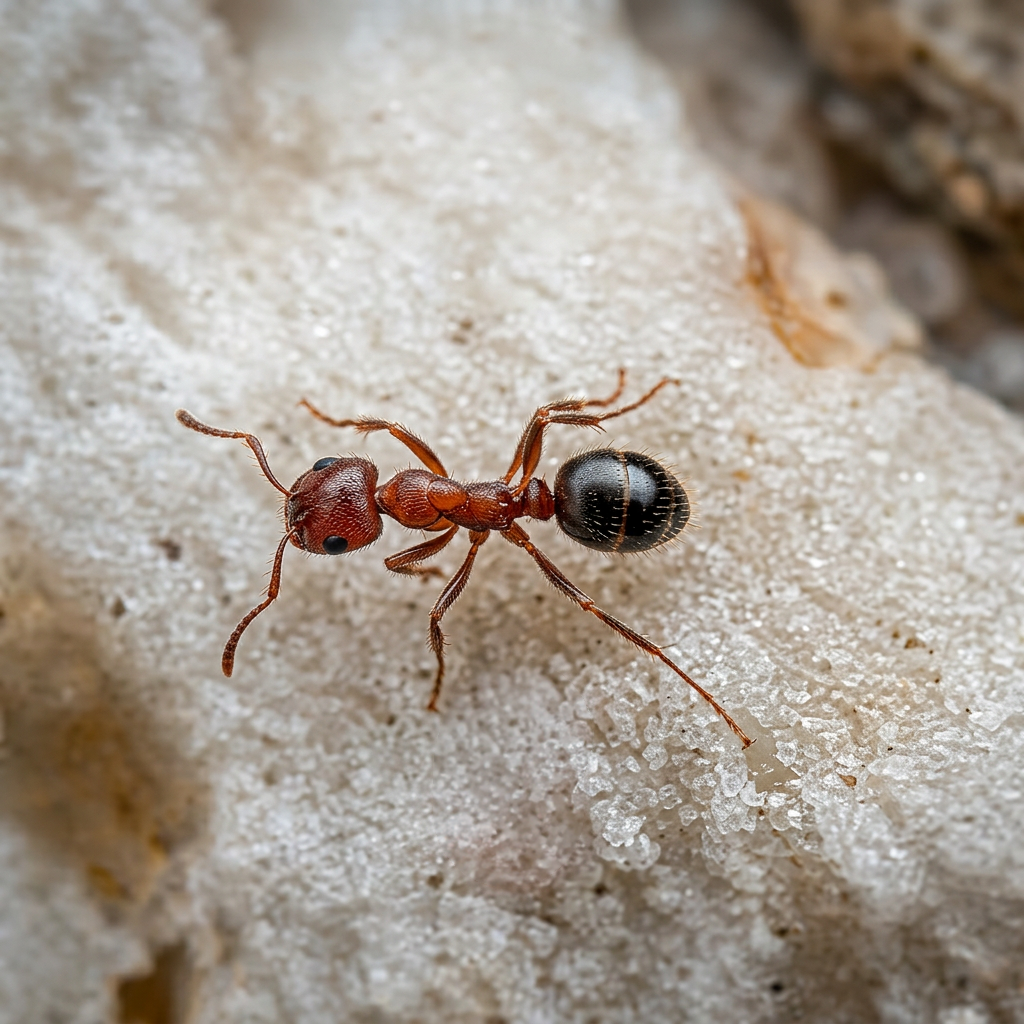
If you’ve walked across your own backyard barefoot lately and lived to regret it, you already know: fire ants are having a moment. Mounds are popping up along fence lines, in the cracks of the driveway, right next to the kids’ trampoline. And they seem angrier than they were back in June.
You’re not imagining it. There’s real biology behind the August surge, and understanding it is the key to actually beating these things instead of just making them mad.
Why August Turns Up the Heat (Literally)
Fire ants are cold-blooded, which means their activity is driven almost entirely by soil and air temperature. In deep summer, Houston’s ground temperature runs hot enough that colonies push huge numbers of foragers to the surface looking for food and moisture, especially after a rain. More ants above ground means more ants encountering people, pets, and lawn equipment, and a disturbed colony’s response to a threat is immediate and coordinated. That’s the “meaner” part: it’s not that individual ants are more aggressive, it’s that there are simply more of them defending the mound at once.
Fire ants are also opportunists. Late summer means more outdoor grilling, more pet food left on the patio, more sprinkler runoff, all of which are dinner bells for a colony that’s already running at full capacity.
Here’s the Counterintuitive Part: Summer Is the Worst Time to Treat Them
This is the part almost nobody tells homeowners. Right now, when the mounds are the most visible and the most annoying, is actually the least effective time to treat for fire ants.
Fire ant foraging peaks when soil temperatures sit between roughly 70 and 85 degrees. In the brutal heat of a Houston August, worker ants retreat deeper underground during the hottest parts of the day to protect the colony, which means they’re not out picking up bait as reliably. Treat now, and you often get a knockdown on the ants you can see, followed by mounds reappearing a few weeks later as the rest of the colony rebounds.
Fall changes the equation. As temperatures ease into that 70–85 degree sweet spot from September through October, foraging activity becomes more consistent throughout the day, and worker ants carry bait back to the queen far more reliably. Research from Texas A&M AgriLife Extension backs this up: yards treated in fall consistently stay cleaner through the following spring than yards treated at the height of summer. Treat more than what you see and you’re disrupting the colony at its source.
Note: Don’t let this research confuse you. The idea isn’t to treat fire ants once per year. You really want to ensure you have a program dialed in to how to best treat them in each season. Just ensure that you don’t start to let off the gas pedal on the attack during these upcoming fall months.
So What Do You Do About the Mounds Right Now?
You don’t have to just grit your teeth and wait two months. This is exactly where a prescription approach beats a one-size-fits-all spray. At EnviRx, our Rx-Guard service is built around identifying what’s actually happening on your property, active mounds, foraging patterns, moisture sources, before deciding on treatment. That often means:
- Targeted knockdown now for mounds in high-traffic areas (near doors, play areas, walkways) where safety can’t wait for ideal conditions.
- A fall-timed colony treatment scheduled to hit peak effectiveness when foraging activity is most consistent, so you’re not fighting the same mounds again next spring.
- Ongoing monitoring between visits, since Houston’s climate means fire ants are never fully dormant, just less visible in the coldest weeks of winter.
A Few Precautions While You Wait
- Don’t pour boiling water on a mound. It works on maybe six out of ten colonies, is genuinely dangerous to carry across a yard, and may kill your grass in the process.
- Keep an eye on kids and pets around any mound you spot. It only takes brushing against one to trigger a swarm response, and the resulting stings can cause a serious allergic reaction in some people.
- If you get stung, brush the ants off quickly rather than swatting or scraping, since swatting can trigger more ants to grab on.
Fire ants aren’t going anywhere in Houston, they’re a year-round reality here. But treating them on their schedule instead of yours is the difference between a yard that stays clear and one you’re re-treating every few months. If you’ve got mounds you want looked at now, or you’d rather just get on the schedule for a fall treatment timed right, reach out to EnviRx and we’ll build a plan around what’s actually happening in your yard.
Rob Greer, founder and CEO of EnvirX Pest Solutions, developed a deep respect for nature growing up in a small rural town, where he raised horses and cattle. He began his career in pest control in 2001 and has spent over two decades building and leading pest control operations across the country.
Rob holds a BS in Business Management and is an Associate Certified Entomologist (ACE), a credential held by a small percentage of pest control professionals nationwide. His contributions to the industry include collaboration on the National Pesticide Applicator Certification Core Manual for the EPA and the QualityPro Customer Service Credential Task Force. He is an active member of the Texas Pest Management Association.
The outskirts of Houston is where Rob ran the trails of Huntsville at the Rocky Raccoon 100, and EnvirX’s leadership team lives and works throughout the greater Houston metro. That on-the-ground familiarity with Gulf Coast pest pressures and what residents actually need is what shaped the EnvirX approach…a prescription-based model that diagnoses root causes rather than just treating symptoms.
Leave a Reply