


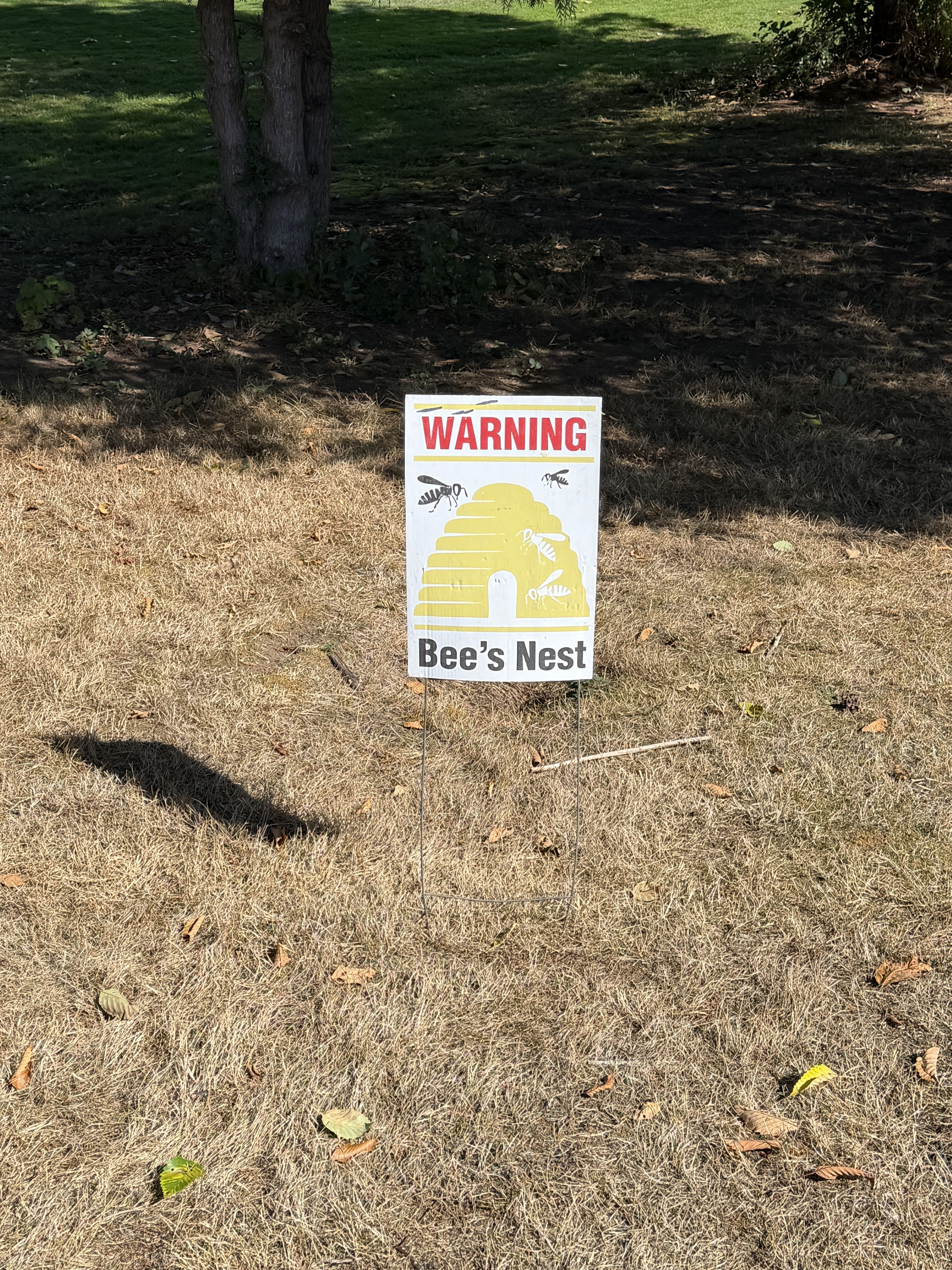
Our CFO was walking through a neighborhood in B.C., Canada recently and spotted a yard sign that stopped him in his tracks. “WARNING: BEES NEST.” Between the text, a honeycomb hive, with a couple of wasps buzzing around it for good measure.
It was a nice gesture. It was also, entomologically speaking, a bit of a mixed message like a sign that says “Beware of Dog” with a picture of a raccoon. And that’s exactly the point we want to make today: most people genuinely can’t tell a bee from a wasp, and that mix-up matters more than you’d think.

The Great Backyard Mix-Up
Bees and wasps get lumped together constantly. They’re both flying, buzzing, occasionally-stinging insects that show up uninvited at your backyard barbecue, so it’s an easy mistake to make. But biologically … and practically, for anyone dealing with a nest near their home .. they’re entirely different characters.
Bees (think honeybees and bumblebees) are the chill, hardworking herbivores of the insect world. They’re fuzzy, round-bodied, and built for hauling pollen (they even have little “pollen baskets” on their legs). They’re generally not looking for a fight. A honeybee can only sting once (it’s fatal for her, so she’s not exactly trigger-happy), and most bee species are far more interested in flowers than in your soda can.
Wasps (yellow jackets, hornets, paper wasps) are the sleeker, shinier, more short-tempered cousins. Smooth-bodied, narrow-waisted, and often more aggressive, wasps are predators. They hunt other insects and are also very fond of sugar, meat, and whatever’s on your picnic table. Unlike bees, wasps can sting repeatedly, and they don’t need much provocation to do it.
So that Canadian sign, technically, might have had it backwards. A hive full of docile pollinators is a very different situation than a paper nest full of yellow jackets ready to defend their turf.
Why the Difference Matters
Beyond a fun fact for trivia night, knowing what’s living in your yard changes how you should react:
- Safety first. Bees are unlikely to swarm unless the hive itself is disturbed. Wasps, especially yellow jackets, can become aggressive with far less provocation. Their repeat-sting ability makes encounters riskier, particularly for anyone with an allergy.
- Conservation matters. Bees are essential pollinators, and many species are in decline. If you’ve got a bee colony on your property, the right move is often relocation over extermination. A licensed beekeeper can often relocate them instead of destroying them.
- Removal methods differ. Wasp nests and bee hives aren’t treated the same way. Using the wrong approach can either fail to solve the problem or worse, needlessly harm a beneficial pollinator population.
- Nest location is a clue, but not a guarantee. Wasps love eaves, attics, and hollow structures. Bees often prefer more established, protected cavities. But there’s plenty of overlap, so appearance and behavior matter more than location alone.
A Few Quick Visual Tells
If you want the fast version for your next backyard face-off:
- Body: Bees = fuzzy and round. Wasps = smooth, shiny, and slim-waisted.
- Behavior: Bees are focused on flowers. Wasps are drawn to meat, sugar, and trash cans.
- Nests: Bees often build waxy, layered honeycomb. Wasps build papery, layered nests that look almost like grey origami.
- Temperament: Bees sting once and only when truly threatened. Wasps can sting repeatedly and are quicker to get defensive.


When in Doubt, Don’t DIY It
Even with all these tips, telling species apart from ten feet away. This is especially true if there’s an active nest involved. It isn’t always easy, and getting up close to find out is not exactly a great weekend hobby.
If you’ve spotted a nest and you’re not sure what you’re dealing with, that’s exactly the kind of thing our team at EnviRx Pest Solutions can help sort out safely, and with the right approach for whatever’s actually living out there (bee or wasp).
And hey, if you ever do put up a yard sign of your own, maybe double check the icon first.
Explore more fascinating facts about the natural world at goenvirx.com.
About Rob Greer: Pest Control Expert and Industry Leader
Rob Greer, founder and CEO of EnvirX Pest Solutions, developed a deep respect for nature growing up in a small rural town, where he raised horses and cattle. He began his career in pest control in 2001 and has spent over two decades building and leading pest control operations across the country.
Rob holds a BS in Business Management and is an Associate Certified Entomologist (ACE), a credential held by a small percentage of pest control professionals nationwide. His contributions to the industry include collaboration on the National Pesticide Applicator Certification Core Manual for the EPA and the QualityPro Customer Service Credential Task Force. He is an active member of the Texas Pest Management Association.
The outskirts of Houston is where Rob ran the trails of Huntsville at the Rocky Raccoon 100, and EnvirX’s leadership team lives and works throughout the greater Houston metro. That on-the-ground familiarity with Gulf Coast pest pressures and what residents actually need is what shaped the EnvirX approach…a prescription-based model that diagnoses root causes rather than just treating symptoms.
Leave a Reply