


Serving Tomball, Katy, Cypress, and The Woodlands
In about five weeks, half the front porches from Tomball to Katy will be draped in cotton webbing, and it will look fantastic. Stretchy white webs across the shrubs, a plastic tarantula on the door wreath, maybe a giant inflatable spider straddling the garage. Ten out of ten on festive decorations.
The problem is that our local arachnids have seen the decorations, and they have decided to collaborate.
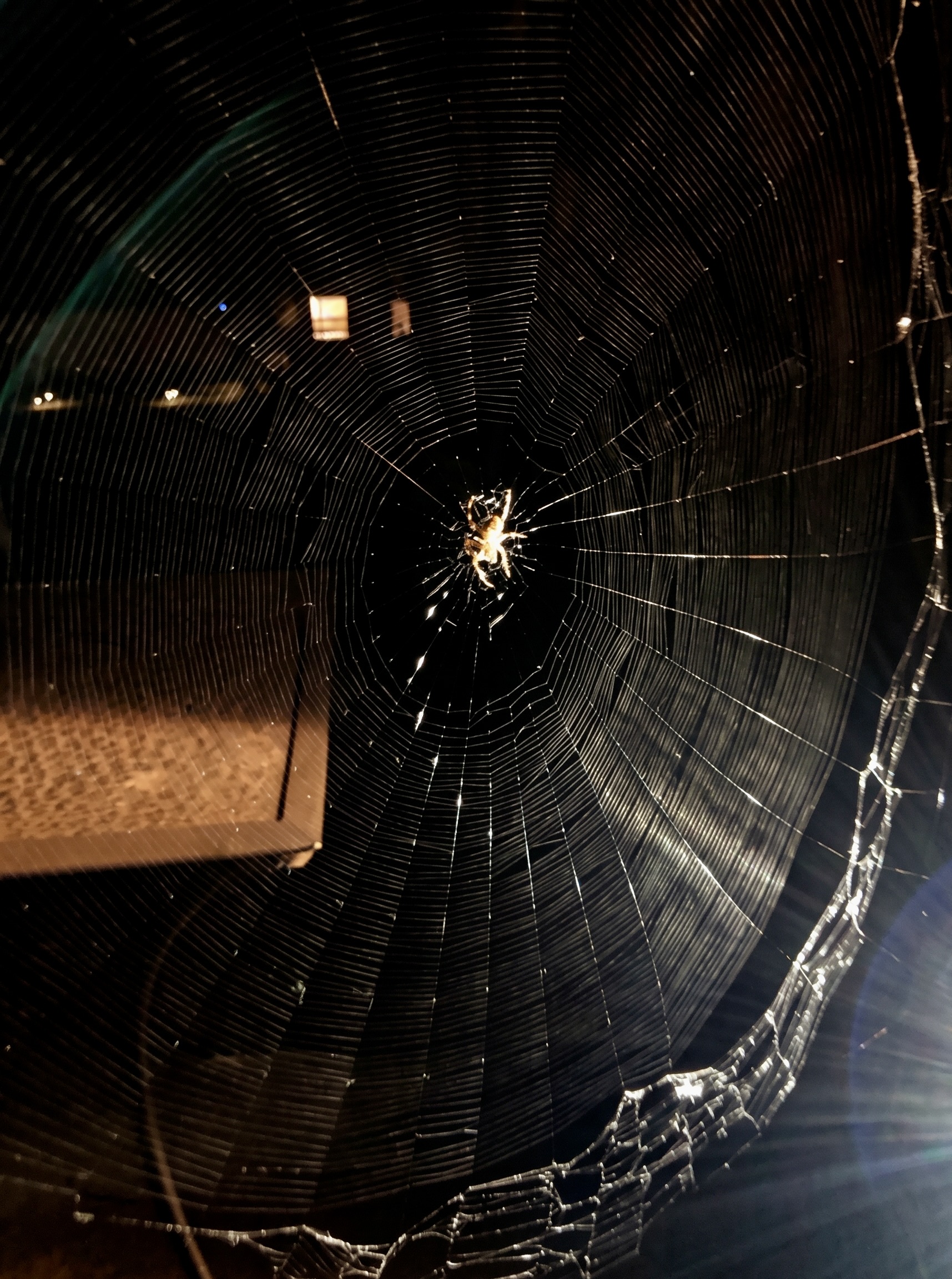
Here’s the thing about volunteer spiders: they are terrible decorators. A real spider will not put a web where it looks spooky. It will put a web at exactly face height, directly across the walkway between your front door and your car, anchored to the one column you brush past every single morning. You will walk into it at 6:45 a.m. in a clean shirt, do the full-body flail that every Houston homeowner knows intimately, and spend the next ten minutes convinced something is in your hair.
That’s the scare nobody signed up for. Let’s talk about how to keep the haunting seasonal and appropriately artificial.
Why September and October Are Peak Spider Season Here
Fall is when spider activity spikes across the Houston area, and there are three reasons for it.
- The spiderlings that hatched last spring have spent all summer feasting on our abundant supply of mosquitoes and gnats, and they’re now full-grown spiders. Same spider, much more noticeable.
- Mature males stop building and start wandering, looking for mates. A wandering spider doesn’t stay politely in the hedge. It crosses open ground including your garage floor, your baseboards, and yes, the bathroom tile at the exact moment you’re stepping out of the shower with your guard down and your glasses off.
- The first real cool fronts push insects toward the warm, lit, humid edges of our homes. Where the bugs go, the spiders follow.
The Neighborhood Report
The Woodlands – All that beautiful tree canopy and greenbelt frontage is prime orb weaver real estate. Golden silk orb weavers (locals call them banana spiders) will string enormous webs between porch columns, across side yards, and over trail-adjacent fence lines. They’re dramatic, they’re harmless, and they’re the number-one cause of the 6:45 a.m. flail.

Tomball – Bigger lots, older structures, sheds, barns, and detached garages. Those undisturbed spaces are where you’re more likely to find black widows tucked under workbenches and in stacked materials.

Katy – Newer construction moves fast, and gaps happen. Garage door sweeps that don’t quite seal, unscreened weep holes, and bright white exterior lighting on a brand-new elevation add up to a very effective bug magnet.
Cypress – Proximity to Cypress Creek, retention ponds, and drainage means a heavy flying-insect load. More prey means more predators. It’s simple math with eight legs.
The Guest List: Who You’re Actually Dealing With
Most of what you’ll see is genuinely harmless and honestly beneficial. Orb weavers, spiny-backed orb weavers, cellar spiders in the garage corners, and wolf spiders on the patio are all doing free pest control. Wolf spiders are big and fast and startling, but they’re not out to get you.
Two deserve real respect. Black widows like undisturbed, protected spaces close to the ground. Think: under patio furniture, inside grill covers, in water meter boxes, behind stacked firewood, and in the hollow corners of kids’ playsets. Brown recluse prefer quiet indoor storage: closets, attics, and cardboard boxes that haven’t moved in a year.
Read that last sentence again and then think about where your Halloween bins live. We’re not here to scare you before the tricks and treats, just to remind you and warn you to take proper precautions.
If anyone in the house is bitten and develops significant pain, spreading redness, cramping, or a wound that worsens over a day or two, that’s a call for a doctor (not “Dr. Google”) to resolve.

Your Pre-Decorating Exorcism
Do these before the bins come down, and you’ll cut your spider pressure dramatically.
Shake before you shake. Wear gloves when you pull décor bins out of the attic or garage. Open them outside, tip them out onto the driveway, and give costumes and fabric a hard shake before anyone wears them. Storage boxes are exactly the habitat recluse want.
Sweep the eaves. Take a broom or an extension pole to your rooflines, porch ceilings, window frames, and door frames once a month. Knocking down webs removes the spider’s investment and, critically, removes egg sacs before they hatch. This is the single highest-value thing you can do yourself.
Fix the buffet. Spiders are following food, and food is following your porch lights. Swap bright white bulbs for warm amber or yellow LEDs, and where you can, move lighting away from doorways so the insect party happens somewhere other than your entry.
Clear the perimeter. Pull firewood, potted plants, pool noodles, and leaf litter back from the foundation. A two-foot buffer of open ground is a real deterrent.
Close the doors. Check your garage door sweep for daylight, screen your weep holes, and repair torn window screens. Most indoor spiders walked in through a gap you can actually fix.
Chase the moisture. Fix dripping hose bibs and leaky sink traps. Damp equals bugs, and bugs equal bathroom-floor cameos.
Vacuum, don’t stomp. Indoors, a vacuum hose handles spiders, webs, and egg sacs in one pass with no squish and no stain.
When It’s Time to Call
If you’re sweeping webs every weekend and they’re back by Wednesday, if you’re finding widows around the play structure, or if the wandering-spider parade inside has stopped being funny, the underlying issue is usually the insect population feeding them. Fortunately, that’s a treatable problem, not a housekeeping one.
That’s some of the work we do for you at EnviRx: figure out what’s drawing them in, seal what’s letting them in, and treat with precision. Exterior web sweeping is part of it. So is asking why the webs keep coming back.
No tricks, only treats. We get enough of the former in October. But if your porch is starting to look haunted a little too authentically, we’re right here in Tomball at (281) 695-8784.
Decorate boldly. Just make sure the webs came from a bag.
Explore more fascinating facts about the natural world at goenvirx.com.
About Rob Greer: Pest Control Expert and Industry Leader
Rob Greer, founder and CEO of EnviRx Pest Solutions, developed a deep respect for nature growing up in a small rural town, where he raised horses and cattle. He began his career in pest control in 2001 and has spent over two decades building and leading pest control operations across the country.
Rob holds a BS in Business Management and is an Associate Certified Entomologist (ACE), a credential held by a small percentage of pest control professionals nationwide. His contributions to the industry include collaboration on the National Pesticide Applicator Certification Core Manual for the EPA and the QualityPro Customer Service Credential Task Force. He is an active member of the Texas Pest Management Association.
The outskirts of Houston is where Rob ran the trails of Huntsville at the Rocky Raccoon 100, and EnvirX’s leadership team lives and works throughout the greater Houston metro. That on-the-ground familiarity with Gulf Coast pest pressures and what residents actually need is what shaped the EnvirX approach…a prescription-based model that diagnoses root causes rather than just treating symptoms.
Leave a Reply